

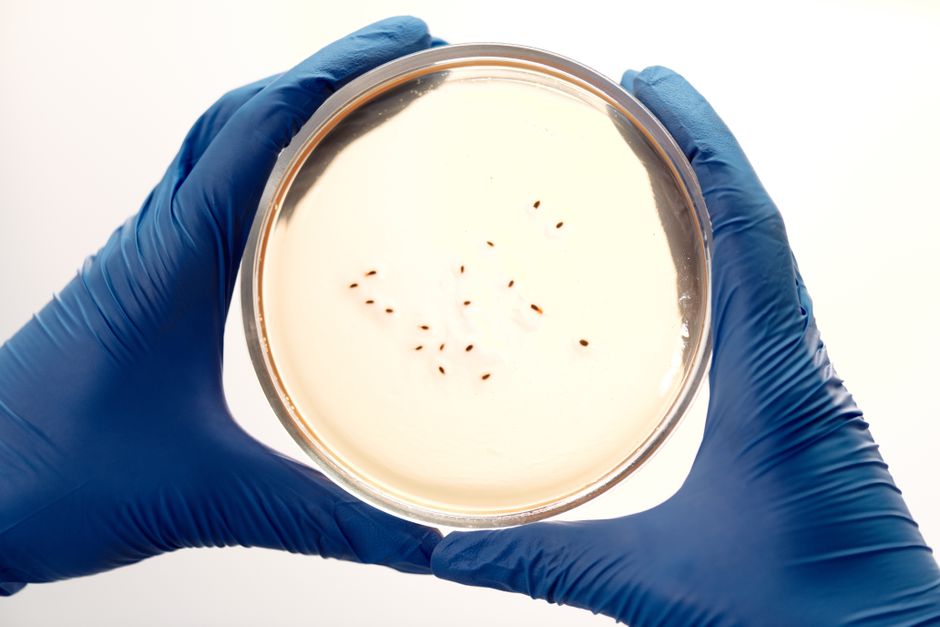
Les antibiotiques rendraient les bactéries résistantes comme un entraînement rendrait un athlète plus fort. L’image est séduisante, mais elle mélange deux mécanismes. Le corps ne devient pas résistant au médicament : certaines bactéries survivent mieux que d’autres, puis se multiplient.
Le verbe « rendre » cache le piège
Un antibiotique agit sur des bactéries en bloquant leur croissance ou en les détruisant, selon la molécule. Il ne traite pas une infection virale, car un virus ne possède pas les mêmes cibles biologiques qu’une bactérie. Prendre un antibiotique contre une grippe n’agit donc pas sur le virus.
La résistance concerne la bactérie, pas l’être humain qui prend le traitement. Une personne peut être infectée par une souche sensible, une souche résistante ou plusieurs bactéries dont la sensibilité diffère. Le patient ne devient pas imperméable au médicament, même si l’infection peut ensuite être plus difficile à traiter.
Premier indice : la résistance peut précéder la première dose

Dans une population bactérienne, les cellules ne sont pas toutes identiques. Des mutations apparaissent au fil des générations. La plupart ne donnent aucun avantage, mais certaines modifient la cible de l’antibiotique, réduisent son entrée dans la cellule ou permettent de mieux l’évacuer. Une bactérie porteuse d’une telle modification peut donc exister avant le traitement.
Une autre voie passe par l’acquisition d’un gène de résistance. Les bactéries peuvent échanger des fragments d’ADN, notamment par l’intermédiaire de plasmides, parfois entre lignées différentes. Ce transfert horizontal permet à un gène utile de passer d’une cellule à une autre sans attendre de nombreuses générations. Le médicament ne crée donc pas nécessairement la mutation : il favorise les bactéries qui possèdent déjà une parade.
Le mécanisme central : une sélection, pas un entraînement

Pour suivre l’affaire, le microscope magique peut rester dans son tiroir. Il suffit d’observer la population bactérienne avant, pendant et après l’exposition.
- Avant le traitement, la majorité des bactéries peut être sensible, tandis qu’une minorité possède une résistance.
- Pendant le traitement, les bactéries sensibles sont éliminées ou freinées plus facilement. Les bactéries résistantes ont alors moins de concurrence.
- Après l’exposition, les survivantes se multiplient. La population contient une proportion plus élevée de bactéries résistantes qu’au départ.
L’antibiotique agit comme un filtre de sélection. Il ne transmet pas une consigne aux bactéries et ne les entraîne pas à résister. Il modifie les conditions de vie, puis les bactéries déjà avantagées deviennent plus nombreuses. Le mythe transforme cette sélection en récit d’apprentissage : une belle histoire, un mauvais dossier.
Les mauvais usages donnent un avantage aux survivantes
Un antibiotique pris contre une infection virale n’apporte aucun bénéfice contre le virus, mais il expose tout de même les bactéries présentes dans le corps à une pression de sélection. Un traitement inutile peut ainsi favoriser des bactéries résistantes dans le microbiote, même lorsqu’aucune infection bactérienne ne justifiait le médicament.
Partager un traitement, reprendre une ancienne boîte ou modifier seul la dose et la durée prescrites complique aussi la prise en charge. Si l’état ne s’améliore pas, le bon réflexe est de faire réévaluer le diagnostic par un professionnel, pas d’augmenter ou de prolonger le traitement de son propre chef.
Un autre raccourci serait de croire qu’un traitement justifié ne présente aucun effet sur la résistance. Même un traitement nécessaire peut sélectionner des bactéries résistantescar l’antibiotique n’identifie pas les bactéries utiles et les bactéries responsables de l’infection. L’usage approprié réduit les expositions inutiles, sans supprimer toute pression de sélection.
Bloquer, expulser, neutraliser : le kit de défense bactérien

L’Institut Pasteur décrit ces mécanismes dans sa présentation L’antibiorésistance, ou comment les bactéries deviennent résistantespubliée le 16 novembre 2023 et mise à jour le 9 janvier 2024. Une bactérie résistante peut combiner plusieurs stratégies.
Quatre portes de sortie pour l’antibiotique
- Empêcher l’entrée : la bactérie modifie sa membrane, sa paroi ou ses protéines d’entrée pour laisser passer moins de médicament.
- Expulser la molécule : des pompes d’efflux rejettent l’antibiotique hors de la cellule avant qu’il n’atteigne une concentration efficace.
- Modifier la cible : une mutation change la structure visée et l’antibiotique s’y fixe moins bien.
- Détruire ou transformer le médicament : certaines enzymes dégradent la molécule ou la modifient chimiquement.
Ces mécanismes expliquent pourquoi la résistance à un antibiotique ne signifie pas automatiquement une résistance à tous les autres. Une bactérie peut rester sensible à certaines molécules et résister à d’autres. Lorsqu’elle cumule plusieurs mécanismes ou plusieurs gènes, on parle de multirésistance, avec un choix thérapeutique plus limité.
Une affaire qui dépasse le patient

Les bactéries résistantes et les gènes de résistance peuvent circuler entre les humains, les animaux et l’environnement, par contact, par l’eau ou par les aliments. Le microbiote humain peut aussi héberger des gènes de résistance chez des bactéries qui ne provoquent pas de maladie. Les eaux usées et les résidus d’antibiotiques fournissent d’autres milieux où ces mécanismes peuvent se maintenir et se diffuser.
Une revue scientifique publiée dans Microorganisms et référencée en août 2025, Antibiotics and Antibiotic Resistance Genes in the Environment: Dissemination, Ecological Risks, and Remediation Approachesanalyse la distribution des antibiotiques et des gènes de résistance dans l’environnement. Elle décrit notamment le rôle des plasmides, transposons et intégrons dans les transferts horizontaux. Cette revue rassemble des résultats de travaux différents : elle documente des mécanismes et des risques, sans établir que chaque exposition produit le même effet dans chaque milieu.
Dans une présentation publiée en 2023 et mise à jour en 2024, l’Institut Pasteur rappelle que « tout ce qui va stresser les bactéries va favoriser les transferts horizontaux ». La formule concerne notamment les faibles concentrations d’antibiotiques observées dans certaines eaux usées. Le dossier ne se limite donc pas à la boîte prise par un patient.
Pourquoi le raccourci survit
La phrase « les antibiotiques rendent les bactéries résistantes » relie deux événements que l’on peut observer : une personne prend un traitement, puis une résistance est détectée. Elle oublie les étapes intermédiaires, comme la présence de bactéries déjà résistantes, les mutations et les échanges de gènes. Une corrélation ne suffit pas à expliquer la causalité.
La formule est aussi facile à répéter. Dans une conversation ou un message partagé, le mécanisme se simplifie jusqu’à faire croire que la bactérie apprend à se défendre. C’est le classique jeu du téléphone arabe : l’information enfle à chaque transmission, tandis que la sélection naturelle disparaît du récit.
Réduire la pression de sélection sans bannir les antibiotiques

Les antibiotiques restent nécessaires pour certaines infections bactériennes. La prévention consiste à éviter les expositions sans bénéfice et à suivre le traitement prescrit.
- Ne pas utiliser un antibiotique contre un rhume, une grippe ou une autre infection virale sans indication médicale.
- Respecter la molécule, les horaires, la dose et la durée prescrites, sans partager le traitement.
- Ne pas reprendre une ancienne boîte pour une nouvelle infection, dont la cause peut être différente.
- En cas d’aggravation ou d’absence d’amélioration, demander une réévaluation plutôt que modifier seul le traitement.
- Réduire le risque d’infection grâce à l’hygiène et aux vaccinations recommandées, ce qui peut limiter le recours ultérieur aux antibiotiques.
Les antibiotiques ne rendent pas le corps résistant et ne fabriquent pas mécaniquement des bactéries résistantes. Ils exercent une pression de sélection qui favorise les bactéries déjà résistantes ou capables d’acquérir un gène adapté. Un usage inutile ou mal contrôlé accélère le phénomène, tandis qu’un traitement justifié peut lui aussi sélectionner des résistances. La formulation exacte est donc la suivante : les bactéries deviennent résistantes, et les antibiotiques sélectionnent celles qui survivent.
Sources et références scientifiques
- Antibiotics and Antibiotic Resistance Genes in the Environment: Dissemination, Ecological Risks, and Remediation Approaches – PMC. Microorganisms. DOI: 10.3390/microorganisms13081763 · PMID: 40871267.
- 1.Klein E.Y., Impalli I., Poleon S., Denoel P., Cipriano M., Boeckel T.P.V., Pecetta S., Bloom D.E., Nandi A. Global trends in antibiotic consumption during 2016-2023 and future projections through 2030. Proc. Natl. Acad. Sci. USA. 2024;121:e2411919121. doi: 10.1073/pnas.2411919121. [DOI] [PMC free article] [PubMed] [Google Scholar]. doi:10.1073/pnas.2411919121.
- 2.Huang S.K., Yu J.P., Li C., Zhu Q.J., Zhang Y.S., Lichtfouse E., Marmier N. The Effect Review of Various Biological, Physical and Chemical Methods on the Removal of Antibiotics. Water. 2022;14:3138. doi: 10.3390/w14193138. [DOI] [Google Scholar]. doi:10.3390/w14193138.
- 3.Bondad-Reantaso M.G., MacKinnon B., Karunasagar I., Fridman S., Alday-Sanz V., Brun E., Le Groumellec M., Li A.H., Surachetpong W., Karunasagar I., et al. Review of alternatives to antibiotic use in aquaculture. Rev. Aquac. 2023;15:1421-1451. doi: 10.1111/raq.12786. [DOI] [Google Scholar]. doi:10.1111/raq.12786.
- 4.Sazykin I.S., Khmelevtsova L.E., Seliverstova E.Y., Sazykina M.A. Effect of Antibiotics Used in Animal Husbandry on the Distribution of Bacterial Drug Resistance (Review) Appl. Biochem. Microbiol. 2021;57:20-30. doi: 10.1134/S0003683821010166. [DOI] [Google Scholar]. doi:10.1134/S0003683821010166.
- 5.Jiang C.X., Zhao Z.L., Zhu D., Pan X., Yang Y.Y. Rare resistome rather than core resistome exhibited higher diversity and risk along the Yangtze River. Water Res. 2024;249:210911. doi: 10.1016/j.watres.2023.120911. [DOI] [PubMed] [Google Scholar]. doi:10.1016/j.watres.2023.120911.
- 6.Huang F.Y., Zou S.Z., Deng D.D., Lang H., Liu F. Antibiotics in a typical karst river system in China: Spatiotemporal variation and environmental risks. Sci. Total Environ. 2019;650:1348-1355. doi: 10.1016/j.scitotenv.2018.09.131. [DOI] [PubMed] [Google Scholar]. doi:10.1016/j.scitotenv.2018.09.131.
- rvalho I.T., Santos L. Antibiotics in the aquatic environments: A review of the European scenario. Environ. Int. 2016;94:736-757. doi: 10.1016/j.envint.2016.06.025. [DOI] [PubMed] [Google Scholar]. doi:10.1016/j.envint.2016.06.025.
- 8.Zhou X.Q., Cuasquer G.J.P., Li Z.F., Mang H.P., Lv Y.P. Occurrence of typical antibiotics, representative antibiotic-resistant bacteria, and genes in fresh and stored source-separated human urine. Environ. Int. 2021;146:106280. doi: 10.1016/j.envint.2020.106280. [DOI] [PMC free article] [PubMed] [Google Scholar]. doi:10.1016/j.envint.2020.106280.
- 9.MacLauchlin C., Schneider S.E., Keedy K., Fernandes P., Jamieson B.D. Metabolism, Excretion, and Mass Balance of Solithromycin in Humans. Antimicrob. Agents Chemother. 2018;62:e01474-17. doi: 10.1128/AAC.01474-17. [DOI] [PMC free article] [PubMed] [Google Scholar]. doi:10.1128/AAC.01474-17.
- 10.Malakootian M., Yaseri M., Faraji M. Removal of antibiotics from aqueous solutions by nanoparticles: A systematic review and meta-analysis. Environ. Sci. Pollut. Res. 2019;26:8444-8458. doi: 10.1007/s11356-019-04227-w. [DOI] [PubMed] [Google Scholar]. doi:10.1007/s11356-019-04227-w.
- 11.Van Boeckel T.P., Brower C., Gilbert M., Grenfell B.T., Levin S.A., Robinson T.P., Teillant A., Laxminarayan R. Global trends in antimicrobial use in food animals. Proc. Natl. Acad. Sci. USA. 2015;112:5649-5654. doi: 10.1073/pnas.1503141112. [DOI] [PMC free article] [PubMed] [Google Scholar]. doi:10.1073/pnas.1503141112.
- 12.Nogrady B. The fight against antimicrobial resistance. Nature. 2023;624:S30-S32. doi: 10.1038/d41586-023-03912-8. [DOI] [Google Scholar]. doi:10.1038/d41586-023-03912-8.
- Pollution by antimicrobials and antibiotic resistance genes in East Africa: Occurrence, sources, and potential environmental implications – PMC. Toxicology reports. DOI: 10.1016/j.toxrep.2025.101969 · PMID: 40104048.
- 1.Rahman M.M., et al. "An overview of antimicrobial stewardship optimization: the use of antibiotics in humans and animals to prevent resistance. Antibiotics. 2022;11(5):667. doi: 10.3390/antibiotics11050667. [DOI] [PMC free article] [PubMed] [Google Scholar] [Retracted]. doi:10.3390/antibiotics11050667.
- 2.Kimera Z.I., Mgaya F.X., Misinzo G., Mshana S.E., Moremi N., Matee M.I. "Multidrug-resistant, including extended-spectrum beta lactamase-producing and quinolone-resistant, Escherichia coli isolated from poultry and domestic pigs in dar es salaam, Tanzania. Antibiotics. 2021;10(4):406. doi: 10.3390/antibiotics10040406. [DOI] [PMC free article] [PubMed] [Google Scholar]. doi:10.3390/antibiotics10040406.
- 3.Njiru S.K. University of Nairobi. Antimicrob. Susceptibility Patterns Enterobact. Isol. Urin. Samples Kenya Natl. Hosp. Microbiol. Lab. 2013 [Google Scholar].
- 4.Ndiba P.M. Third Gener. Cephalosporins Multi Drug Resist. Kleb. Pneumoniae Nairobi, Kenya. 2016 [Google Scholar].
- 5.Sangeda R.Z., et al. "National antibiotics utilization trends for human use in Tanzania from 2010 to 2016 inferred from Tanzania medicines and medical devices authority importation data. Antibiotics. 2021;10(10):1249. doi: 10.3390/antibiotics10101249. [DOI] [PMC free article] [PubMed] [Google Scholar]. doi:10.3390/antibiotics10101249.
- 6.Kimera Z.I., Mshana S.E., Rweyemamu M.M., Mboera L.E., Matee M.I. "Antimicrobial use and resistance in food-producing animals and the environment: an African perspective. Antimicrob. Resist. Infect. Control. 2020;9:1-12. doi: 10.1186/s13756-020-0697-x. [DOI] [PMC free article] [PubMed] [Google Scholar]. doi:10.1186/s13756-020-0697-x.
- 7.Karunarathna I., Gunasena P., Hapuarachchi T., Gunathilake S. "Cefiderocol and cephalosporins: a novel approach to managing resistant Gram-negative bacterial infections. ResearchGate. 2024 〈 researchgate. net/publication〉 (ed) [Google Scholar].
- 8.S. Vilvanathan, "Penicillins, Cephalosporins, and Other b-Lactam Antibiotics," Abialbon Paul Nishanthi Anandabaskar Jayanthi Mathaiyan, p. 821, 2021..
- 9.Sharma B., Chalikwar R., Bhalerao S., Gondane A.A., Pawar D., Sharma A. "Cefotaxime versus ceftriaxone: a comprehensive comparative review. Cureus. 2024;16(9) doi: 10.7759/cureus.69146. [DOI] [PMC free article] [PubMed] [Google Scholar]. doi:10.7759/cureus.69146.
- 10.Marwa J.M., Ngayomela I.H., Seni J., Mshana S.E. "Cefepime versus Ceftriaxone for perioperative systemic antibiotic prophylaxis in elective orthopedic surgery at Bugando Medical Centre Mwanza, Tanzania: a randomized clinical study. BMC Pharmacol. Toxicol. 2015;16:1-9. doi: 10.1186/s40360-015-0039-4. [DOI] [PMC free article] [PubMed] [Google Scholar]. doi:10.1186/s40360-015-0039-4.
- 11.Maghembe R.S., et al. "Metagenome mining divulges virulent and multidrug resistant Pseudomonas aeruginosa ST242 and Klebsiella michiganensis ST 1b23 coinfecting an 8-month-old meningitis infant under ICU in Kampala, Uganda, East Africa. Heliyon. 2024;10(20) doi: 10.1016/j.heliyon.2024.e39455. [DOI] [PMC free article] [PubMed] [Google Scholar]. doi:10.1016/j.heliyon.2024.e39455.
- 12.Bouza E. "The role of new carbapenem combinations in the treatment of multidrug-resistant Gram-negative infections. J. Antimicrob. Chemother. 2021;76(ement_4):iv38-iv45. doi: 10.1093/jac/dkab353. [DOI] [PMC free article] [PubMed] [Google Scholar]. doi:10.1093/jac/dkab353.
- How Glyphosate and Its Derivatives Influence Antimicrobial Resistance Emergence and Transmission: A One Health Perspective – PMC. Antibiotics (Basel, Switzerland). DOI: 10.3390/antibiotics15040419 · PMID: 42041382.
- 1.Zerrouki H., Hamieh A., Hadjadj L., Rolain J.-M., Baron S.A. The Effect of Combinations of a Glyphosate-Based Herbicide with Various Clinically Used Antibiotics on Phenotypic Traits of Gram-Negative Species from the ESKAPEE Group. Sci. Rep. 2024;8:21006. doi: 10.1038/s41598-024-68968-6. [DOI] [PMC free article] [PubMed] [Google Scholar]. doi:10.1038/s41598-024-68968-6.
- 2.Gomes M.P., Smedbol E., Chalifour A., Hénault-Ethier L., Labrecque M., Lepage L., Lucotte M., Juneau P. Alteration of Plant Physiology by Glyphosate and Its By-Product Aminomethylphosphonic Acid (AMPA), an Overview. J. Exp. Bot. 2014;63:4691-4703. doi: 10.1093/jxb/eru269. [DOI] [PubMed] [Google Scholar]. doi:10.1093/jxb/eru269.
- 3.Raoult D., Hadjadj L., Baron S.A., Rolain J.-M. Role of Glyphosate in the Emergence of Antimicrobial Resistance in Bacteria? J. Antimicrob. Chemother. 2021;72:1655-1657. doi: 10.1093/jac/dkab102. [DOI] [PubMed] [Google Scholar]. doi:10.1093/jac/dkab102.
- 4.Gomes M.P., Brito J.C.M., Vieira F., Kitamura R., Juneau P. Emerging Contaminants in Streams of Doce River Watershed, Minas Gerais, Brazil. Front. Environ. Sci. 2022;9:801599. doi: 10.3389/fenvs.2021.801599. [DOI] [Google Scholar]. doi:10.3389/fenvs.2021.801599.
- 5.Gomes M.P., Tavares D.S., Richardi V.S., Marques R.Z., Wistuba N., Moreira de Brito J.C., Soffiatti P., Sant’Anna-Santos B.F., Navarro da Silva M.A., Juneau P. Enrofloxacin and Roundup® Interactive Effects on the Aquatic Macrophyte Elodea canadensis Physiology. Environ. Pollut. 2019;249:453-462. doi: 10.1016/j.envpol.2019.03.026. [DOI] [PubMed] [Google Scholar]. doi:10.1016/j.envpol.2019.03.026.
- 6.Liao H., Li X., Yang Q., Bai Y., Cui P., Wen C., Liu C., Chen Z., Tang J., Che J., et al. Herbicide Selection Promotes Antibiotic Resistance in Soil Microbiomes. Mol. Biol. Evol. 2021;37:2337-2350. doi: 10.1093/molbev/msab029. [DOI] [PMC free article] [PubMed] [Google Scholar]. doi:10.1093/molbev/msab029.
- arson B.L., Douglass C.H., Duke S.O., Moorman T.B., Tranel P.J. Effects of Glyphosate on Antibiotic Resistance in Soil Bacteria and Its Potential Significance: A Review. J. Environ. Qual. 2025;53:160-180. doi: 10.1002/jeq2.20655. [DOI] [PMC free article] [PubMed] [Google Scholar]. doi:10.1002/jeq2.20655.
- 8.van Bruggen A.H.C., Finckh M.R., He M., Ritsema C.J., Harkes P., Knuth D., Geissen V. Indirect Effects of the Herbicide Glyphosate on Plant, Animal and Human Health Through Its Effects on Microbial Communities. Front. Environ. Sci. 2021;9:763917. doi: 10.3389/fenvs.2021.763917. [DOI] [Google Scholar]. doi:10.3389/fenvs.2021.763917.
- 9.Barbosa da Costa N., Fugère V., Hébert M., Xu C.C.Y., Barrett R.D.H., Beisner B.E., Bell G., Yargeau V., Fussmann G.F., Gonzalez A., et al. Resistance, Resilience, and Functional Redundancy of Freshwater Bacterioplankton Communities Facing a Gradient of Agricultural Stressors in a Mesocosm Experiment. Mol. Ecol. 2021;29:4771-4788. doi: 10.1111/mec.16100. [DOI] [PubMed] [Google Scholar]. doi:10.1111/mec.16100.
- 10.Geng Y., Jiang L., Zhang D., Liu B., Zhang J., Cheng H., Wang L., Peng Y., Wang Y., Zhao Y., et al. Glyphosate, Aminomethylphosphonic Acid, and Glufosinate Ammonium in Agricultural Groundwater and Surface Water in China from 2017 to 2018: Occurrence, Main Drivers, and Environmental Risk Assessment. Sci. Total Environ. 2021;769:144396. doi: 10.1016/j.scitotenv.2020.144396. [DOI] [PubMed] [Google Scholar]. doi:10.1016/j.scitotenv.2020.144396.
- 11.Mohy-Ud-Din W., Bashir S., Akhtar M.J., Asghar H.M.N., Ghafoor U., Hussain M.M., Niazi N.K., Chen F., Ali Q. Glyphosate in the Environment: Interactions and Fate in Complex Soil and Water Settings, and (Phyto) Remediation Strategies. Int. J. Phytoremediation. 2024;25:816-837. doi: 10.1080/15226514.2023.2282720. [DOI] [PubMed] [Google Scholar]. doi:10.1080/15226514.2023.2282720.
- 12.Marques R.Z., da Silva Nogueira K., de Oliveira Tomaz A.P., Juneau P., Wang S., Gomes M.P. Emerging Threat: Antimicrobial Resistance Proliferation during Epidemics, A Case Study of the SARS-CoV-2 Pandemic in South Brazil. J. Hazard. Mater. 2024;470:134202. doi: 10.1016/j.jhazmat.2024.134202. [DOI] [PubMed] [Google Scholar]. doi:10.1016/j.jhazmat.2024.134202.
- Antimicrobial Resistance in Pediatric Infections: Current Status, Challenges, and Future Directions – PMC. Antibiotics (Basel, Switzerland). DOI: 10.3390/antibiotics15060617 · PMID: 42353740.
- 1.Murray C.J.L., Ikuta K.S., Sharara F., Swetschinski L., Robles Aguilar G., Gray A., Han C., Bisignano C., Rao P., Wool E., et al. Global Burden of Bacterial Antimicrobial Resistance in 2019: A Systematic Analysis. Lancet. 2022;399:629-655. doi: 10.1016/s0140-6736(21)02724-0. [DOI] [PMC free article] [PubMed] [Google Scholar]. doi:10.1016/s0140-6736(21)02724-0.
- 2.GBD 2021 Antimicrobial Resistance Collaborators. Global Burden of Bacterial Antimicrobial Resistance 1990-2021: A Systematic Analysis with Forecasts to 2050. Lancet. 2024;404:1199-1226. doi: 10.1016/s0140-6736(24)01867-1. [DOI] [PMC free article] [PubMed] [Google Scholar]. doi:10.1016/s0140-6736(24)01867-1.
- 3.Folgori L., Bielicki J. Future Challenges in Pediatric and Neonatal Sepsis: Emerging Pathogens and Antimicrobial Resistance. J. Pediatr. Intensive Care. 2019;8:17-24. doi: 10.1055/s-0038-1677535. [DOI] [PMC free article] [PubMed] [Google Scholar]. doi:10.1055/s-0038-1677535.
- mpbell A.J., Daley D.A., Bell J.M., Pang S., Coombs G.W., Carapetis J.R., Bowen A.C., Blyth C.C. Progress towards a Coordinated, National Paediatric Antimicrobial Resistance Surveillance Programme. J. Antimicrob. Chemother. 2020;75:1639-1644. doi: 10.1093/jac/dkaa065. [DOI] [PubMed] [Google Scholar]. doi:10.1093/jac/dkaa065.
- 5.Versporten A., Sharland M., Bielicki J., Drapier N., Vankerckhoven V., Goossens H., ARPEC Project Group The Antibiotic Resistance and Prescribing in European Children Project. Pediatr. Infect. Dis. J. 2013;32:e242-e253. doi: 10.1097/inf.0b013e318286c612. [DOI] [PubMed] [Google Scholar]. doi:10.1097/inf.0b013e318286c612.
- 6.Hsia Y., Lee B.R., Versporten A., Yang Y., Bielicki J., Jackson C., Newland J., Goossens H., Magrini N., Sharland M. Use of the WHO Access, Watch, and Reserve Classification to Define Patterns of Hospital Antibiotic Use (AWaRe) Lancet Glob. Health. 2019;7:e861-e871. doi: 10.1016/S2214-109X(19)30071-3. [DOI] [PubMed] [Google Scholar]. doi:10.1016/S2214-109X(19)30071-3.
- 7.Fleming-Dutra K.E., Hersh A.L., Shapiro D.J., Bartoces M., Enns E.A., File T.M., Finkelstein J.A., Gerber J.S., Hyun D.Y., Linder J.A., et al. Prevalence of Inappropriate Antibiotic Prescriptions Among US Ambulatory Care Visits, 2010-2011. JAMA. 2016;315:1864-1873. doi: 10.1001/jama.2016.4151. [DOI] [PubMed] [Google Scholar]. doi:10.1001/jama.2016.4151.
- 8.Ready D., Lancaster H., Qureshi F., Bedi R., Mullany P., Wilson M. Effect of Amoxicillin Use on Oral Microbiota in Young Children. Antimicrob. Agents Chemother. 2004;48:2883-2887. doi: 10.1128/aac.48.8.2883-2887.2004. [DOI] [PMC free article] [PubMed] [Google Scholar]. doi:10.1128/aac.48.8.2883-2887.2004.
- 9.Wen S.C.H., Harris P.N.A., Forde B., Permana B., Chatfield M.D., Lau C.L., Spurling G., Bauer M.J., Balch R., Chambers H., et al. Characterization of Gram-Negative Bloodstream Infections in Hospitalized Australian Children and Their Clinical Outcomes. Clin. Infect. Dis. 2024;79:734-743. doi: 10.1093/cid/ciae341. [DOI] [PMC free article] [PubMed] [Google Scholar]. doi:10.1093/cid/ciae341.
- 10.Yilmaz S., Akkoc G., Aslan Tuncay S., Parlak B., Canizli Erdemli P., Dizi Isik A., Ergenc Z., Ilki A., Ulger Toprak N., Ergan B., et al. Pediatric Gram-Negative Bloodstream Infections: Epidemiology, Antibiotic Resistance, Clinical Outcomes and Factors Affecting Mortality. J. Infect. Dev. Ctries. 2025;19:238-247. doi: 10.3855/jidc.20258. [DOI] [PubMed] [Google Scholar]. doi:10.3855/jidc.20258.
- 11.Saeedi F.A., Hegazi M.A., Alsaedi H., Alganmi A.H., Mokhtar J.A., Metwalli E.M., Hamadallah H., Siam G.S., Alaqla A., Alsharabi A., et al. Multidrug-Resistant Bacterial Infections in Pediatric Patients. Children. 2024;11:444. doi: 10.3390/children11040444. [DOI] [PMC free article] [PubMed] [Google Scholar]. doi:10.3390/children11040444.
- 12.Huong N.X., Harrison M., Kasahara E., Marais B., Putri N.D., Williams P.C.M. The Challenge of Antimicrobial Resistance in the Asia-Pacific: A Pediatric Perspective. Curr. Opin. Pediatr. 2025;37:116-123. doi: 10.1097/mop.0000000000001437. [DOI] [PMC free article] [PubMed] [Google Scholar]. doi:10.1097/mop.0000000000001437.
- Mark Blaskovich, Professor, The University of Queensland. How do bacteria actually become resistant to antibiotics?.
- ^ one of the biggest global threats ().
- ^ explore how we got here and the potential solutions ().
- ^ Friedrich Nietzsche in 1888 ().
- ^ antibiotic resistance ().
- ^ is not ().
- ^ replicate ().
- ^ depending on the environment ().
- ^ I'm a microbiologist and here's what (and where) I never eat ().
- ^ quickly takes over ().
- ^ exchange of genetic information ().
- ^ readily exchanged between bacteria ().
- ^ particularly good ().
- anous_admin. Résistance aux antibiotiques : pourquoi les bactéries deviennent-elles résistantes?. 2026.
- L’antibiorésistance, ou comment les bactéries deviennent résistantes.
- Résistance aux antibiotiques : symptômes, traitement, prévention – Institut Pasteur.
