

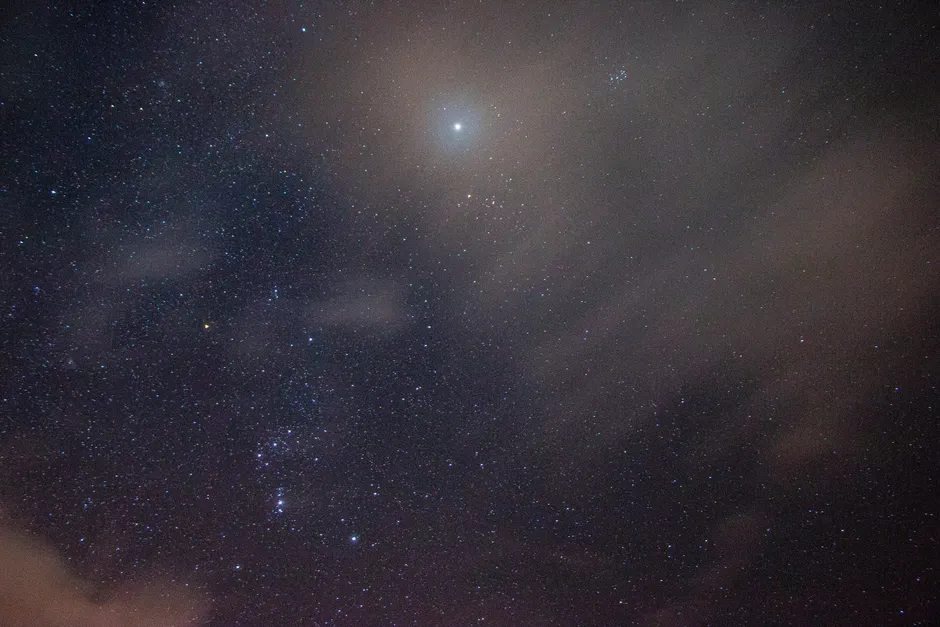
Les autorités peuvent confirmer qu’un signalement existe ou qu’une enquête a été ouverte. Cela ne confirme ni la nature de l’objet ni une origine extraterrestre. Le mot « confirmé » fait ici un tour de passe-passe : il transforme parfois un constat administratif en révélation cosmique.
OVNI, « confirmé », extraterrestre : le glissement qui fausse le dossier

Un OVNI est d’abord un objet ou un phénomène observé qui n’a pas encore été identifié. Le terme décrit une situation d’enquête, pas une origine. Tant que les données ne permettent pas de distinguer un avion, un ballon, un drone, un phénomène naturel ou une erreur de perception, le dossier reste ouvert.
Une autorité peut confirmer qu’un témoin a transmis un rapport, qu’un enregistrement existe ou qu’une enquête a été lancée. Cette confirmation porte alors sur l’existence du signalement ou de la procédure. Elle ne dit pas ce qui a été observé. « Non identifié » signifie « pas encore attribué », pas « extraterrestre ».
La confusion naît souvent d’un titre raccourci : « le gouvernement confirme les OVNI ». La formulation laisse croire à une validation de l’hypothèse alien alors qu’elle peut seulement désigner un dossier officiel. Une belle histoire, un mauvais dossier, si l’on confond la preuve d’une observation avec la preuve de son interprétation.
Une enquête officielle ne fabrique pas une soucoupe

Un dossier administratif sert précisément à conserver une observation, ses circonstances et les éléments disponibles. Il peut donc être officiel tout en restant incomplet. Si la trajectoire, la distance, la météo ou les données de capteurs manquent, l’enquête ne peut pas attribuer l’objet avec certitude.
Le statut « non résolu » n’a rien d’une certification. Il signifie que les informations recueillies ne permettent pas de trancher à ce stade. Une explication peut apparaître plus tard, lorsque de nouvelles données sont disponibles. L’incertitude est un résultat provisoire, pas une preuve cachée.
Le raisonnement vaut pour n’importe quel domaine : une photographie authentique prouve qu’une image a été prise, pas l’identité de ce qu’elle montre. De la même façon, un témoignage sincère établit qu’une personne a vu une scène qu’elle juge inhabituelle. Il ne suffit pas à établir une technologie ou une origine.
La science mesure les signalements, pas les extraterrestres

Une étude publiée dans Scientific Reports en 2023, intitulée An environmental analysis of public UAP sightings and sky view potentialanalyse plus de 98 000 signalements publics d’UAP recueillis dans les États-Unis continentaux entre 2001 et 2020. Les chercheurs ont utilisé une méthode de régression bayésienne pour comparer ces signalements à plusieurs facteurs : pollution lumineuse, couvert végétal, couverture nuageuse, présence d’aéronefs et proximité d’installations militaires.
Les résultats montrent des corrélations compatibles avec une idée simple : les gens signalent davantage de « phénomènes » lorsqu’ils ont davantage la possibilité de les observer. Les lieux où le ciel est plus visible et ceux où des objets sont plus susceptibles de circuler produisent davantage de signalements. Les auteurs indiquent aussi que de nombreuses explications naturelles ou humaines restent à examiner.
Cette publication ne confirme pas l’existence d’engins extraterrestres. Elle ne prétend pas identifier chaque cas, et elle ne transforme pas un ensemble de témoignages en preuve d’une intelligence non humaine. Elle apporte un contexte pour étudier les observations. Une corrélation n’est pas une causalité, et un grand nombre de signalements n’est pas une preuve d’origine.
Le détail compte : l’étude porte sur des signalements publics, pas sur une validation gouvernementale d’un appareil. Un article scientifique identifiable peut analyser la répartition des observations sans répondre à la question spectaculaire que le titre viral lui fait parfois porter.
Pourquoi la légende survit au mot « non identifié »
Premier moteur : la compression du vocabulaire. Une phrase courte rassemble « rapport officiel », « objet non identifié » et « preuve extraterrestre », alors que ces trois propositions n’ont pas le même niveau de preuve. Le raccourci circule bien parce qu’il remplace une enquête longue par une conclusion instantanée.
Deuxième moteur : l’effet de répétition. Une même vidéo ou un même témoignage peut être repris par des comptes, des articles et des vidéos distincts. Le nombre de relais donne alors l’impression de plusieurs preuves indépendantes. Il ne crée pourtant aucune nouvelle mesure. La viralité augmente, la qualité du dossier reste identique.
Troisième moteur : le biais de confirmation. Une personne qui attend une preuve de visiteurs extraterrestres retiendra plus facilement les images compatibles avec cette hypothèse. Les détails moins spectaculaires, comme l’angle de prise de vue, la météo ou l’absence de données de distance, passent au second plan.
La crédibilité d’un témoin ne règle pas non plus le problème d’identification. Un pilote ou un militaire peut rapporter avec sérieux une observation inhabituelle. Son expérience rend le témoignage intéressant, mais elle ne remplace pas une mesure complète. Le mythe tient alors debout comme un château de cartes : chaque élément paraît solide, jusqu’à ce qu’on demande exactement ce qu’il prouve.
Deux questions, deux réponses, un seul verdict

Les gouvernements peuvent confirmer l’existence de signalements, de documents ou d’enquêtes. Oui, à ce niveau administratif, le dossier peut être parfaitement officiel. Mais cette confirmation ne permet pas de conclure que l’objet observé est un engin extraterrestre.
La publication de 2023 apporte le même rappel avec des données à grande échelle : l’environnement et la visibilité influencent la fréquence des signalements, et les cas non identifiés conservent plusieurs explications possibles. Elle ne fournit aucune confirmation d’une origine non humaine.
La bonne question n’est donc pas seulement « le gouvernement a-t-il confirmé un OVNI? ». Il faut demander ce qui a été confirmé exactement : l’existence du rapport, l’enregistrement de la scène, l’ouverture d’une enquête ou l’identité de l’objet. Ces réponses ne se valent pas.
Sources et références scientifiques
- An environmental analysis of public UAP sightings and sky view potential – PMC. Scientific reports. DOI: 10.1038/s41598-023-49527-x · PMID: 38097762.
- 1.U.S. Department of Defense, (DoD). Establishment of unidentified aerial phenomena task force. (2020)..
- 2.U.S. Department of Defense, (DoD). DoD announces the establishment of the airborne object identification and management synchronization group (AOIMSG). (2021)..
- 3.U.S. Department of Defense, (DoD). DoD announces the establishment of the all-domain anomaly resolution office. (2022)..
- 4.Office of the Director of National Intelligence, (DNI). Preliminary assessment: Unidentified aerial phenomena. (2021)..
- 5.Hynek JA. The Hynek UFO Report. Barnes and Noble Books; 1997. [Google Scholar].
- 6.Executive Services Directorate. UFO Fact Sheet. ) (2021)..
- 7.National UFO Reporting Center, (NUFORC). The National UFO Reporting Center Online Database. (2023)..
- 8.Appelle S. UFOs and the scientific method. Science. 1998;281:5379. doi: 10.1126/science.281.5379.919b. [DOI] [Google Scholar]. doi:10.1126/science.281.5379.919b.
- 9.Zimmer TA. Social psychological correlates of possible UFO sightings. J. Soc. Psychol. 1984;123:199. [Google Scholar].
- 10.Zimmer TA. Belief in UFOs as alternative reality, cultural rejection, or disturbed psyche. Deviant Behav. 1985;6:405-419. doi: 10.1080/01639625.1985.9967687. [DOI] [Google Scholar]. doi:10.1080/01639625.1985.9967687.
- 11.Spanos NP, Cross PA, Dickson K, DuBreuil SC. Close encounters: An examination of UFO experiences. J. Abnorm. Psychol. 1993;102(4):624-632. doi: 10.1037/0021-843X.102.4.624. [DOI] [PubMed] [Google Scholar]. doi:10.1037/0021-843X.102.4.624.
- 12.Salisbury FB. The Utah UFO Display: A Biologist’s Report. The Devin-Adair Company; 1974. [Google Scholar].
- UFOS-Net leverages small-scale feature fusion for diabetic foot ulcer segmentation – PMC. Scientific reports. DOI: 10.1038/s41598-025-12442-4 · PMID: 40789876.
- 1.Roglic, G. Who global report on diabetes: A summary. Int. J. Noncommun. Dis.1, 3-8 (2016). [Google Scholar].
- 2.Forbes, J. M. & Cooper, M. E. Mechanisms of diabetic complications. Physiol. Rev.93, 137-188 (2013). [DOI] [PubMed] [Google Scholar].
- 3.Walsh, J., Hoffstad, O., Sullivan, M. & Margolis, D. Association of diabetic foot ulcer and death in a population-based cohort from the united kingdom. Diabet. Med.33, 1493-1498 (2016). [DOI] [PubMed] [Google Scholar].
- 4.Lazzarini, P. A. et al. Prevalence of foot disease and risk factors in general inpatient populations: A systematic review and meta-analysis. BMJ Open5, e008544 (2015). [DOI] [PMC free article] [PubMed] [Google Scholar].
- 5.Xu, P. et al. Ensemble learning for diabetic foot ulcer segmentation based on dfuc2022 dataset. In Proceedings of the 2022 6th International Conference on Electronic Information Technology and Computer Engineering, 1750-1754 (2022)..
- 6.Goyal, M., Yap, M. H., Reeves, N. D., Rajbhandari, S. & Spragg, J. Fully convolutional networks fordiabetic foot ulcer segmentation. In 2017 IEEE International Conference on Systems, Man, and Cybernetics (SMC), 618-623 (IEEE, 2017)..
- 7.Dhar, M. K., Zhang, T., Patel, Y., Gopalakrishnan, S. & Yu, Z. FUSegNet: A deep convolutional neural network for foot ulcer segmentation. Biomed. Signal Process. Control92, 106057 (2024). [Google Scholar].
- 8.Jawahar, M., Anbarasi, L. J., Jasmine, S. G. & Narendra, M. Diabetic foot ulcer segmentation using color space models. In 2020 5th International Conference on Communication and Electronics Systems (ICCES), 742-747 (IEEE, 2020)..
- 9.Liao, T.-Y. et al. HarDNet-DFUS: Enhancing backbone and decoder of HarDNet-MSEG for diabetic foot ulcer image segmentation. In Diabetic Foot Ulcers Grand Challenge, 21-30 (Springer, 2022)..
- 10.Yi, H. et al. OCRNet for diabetic foot ulcer segmentation combined with edge loss. In Diabetic Foot Ulcers Grand Challenge, 31-39 (Springer, 2022)..
- en, Y.-H., Ju, Y.-J. & Huang, J.-D. Capture the devil in the details via partition-then-ensemble on higher resolution images. In Diabetic Foot Ulcers Grand Challenge, 52-64 (Springer, 2022)..
- 12.Bayoudh, K., Knani, R., Hamdaoui, F. & Mtibaa, A. A survey on deep multimodal learning for computer vision: Advances, trends, applications, and datasets. Vis. Comput.38, 2939-2970 (2022). [DOI] [PMC free article] [PubMed] [Google Scholar].
- Transients in the Palomar Observatory Sky Survey (POSS-I) may be associated with nuclear testing and reports of unidentified anomalous phenomena – PMC. Scientific reports. DOI: 10.1038/s41598-025-21620-3 · PMID: 41115916.
- 1.Solano, E., Villarroel, B. & Rodrigo, C. Discovering vanishing objects in POSS I red images using the virtual observatory. Mon. Not. R. Astron. Soc.515, 1380-1391 (2022). [Google Scholar].
- 2.Villarroel, B. et al. The vanishing and appearing sources during a century of observations project I USNO objects missing in modern sky surveys and follow-up observations of a “Missing Star”. Astronom. J.159, 8 (2020). [Google Scholar].
- 3.Villarroel, B. et al. Exploring nine simultaneously occurring transients on April 12th 1950. Sci Rep11, 12794 (2021). [DOI] [PMC free article] [PubMed] [Google Scholar].
- 4.Solano, E. et al. A bright triple transient that vanished within 50 min. Mon. Not. R. Astron. Soc.527, 6312-6320 (2024). [Google Scholar].
- 5.Neamtan, S. M. The Čerenkov effect and the dielectric constant. Phys. Rev.92, 1362-1367 (1953). [Google Scholar].
- lz, J. et al. Comparison of air fluorescence and ionization measurements of EM shower depth profiles: Test of a UHECR detector technique. Astropart. Phys.25, 57-63 (2006). [Google Scholar].
- 7.Hastings, R. UFOs & nukes: extraordinary encounters at nuclear weapons sites (2nd Edition). (Self-Published, 2017)..
- 8.Knuth, K.H. et al. The new science of unidentified aerospace-undersea phenomena (UAP). Preprint at: (2025)..
- 9.Webb, J. H. The fogging of photographic film by radioactive contaminants in cardboard packaging materials. Phys. Rev.76, 375 (1949). [Google Scholar].
- 10.Grosvenor, S., Hancock, L. & Porritt, I. UAP indications analysis 1945-1975 United States atomic warfare complex”. Limina, J. UAP Stud.2(1), 109-128. 10.59661/001c.131854 (2025). [Google Scholar]. doi:10.59661/001c.131854.
- 11.Villarroel, B. (2024) The vanishing star enigma and the 1952 Washington DC UFO wave. The Debrief..
- 12.Ruppelt, E. The Washington merry-go-round in The report on unidentified flying objects. -172 (Doubleday & Company, 1956)..
- The association between atherogenic index of plasma (AIP) and ultrasound attenuation parameter (UAP) in Chinese adults: a cross-sectional study – PMC. Scientific reports. DOI: 10.1038/s41598-026-54877-3 · PMID: 42192182.
- 1.Nassir, F. NAFLD: Mechanisms, Treatments, and Biomarkers. Biomolecules12 (6), 824. 10.3390/biom12060824 (2022). [DOI] [PMC free article] [PubMed] [Google Scholar]. doi:10.3390/biom12060824.
- 2.Younossi, Z. M. et al. The economic and clinical burden of nonalcoholic fatty liver disease in the United States and Europe. Hepatology64 (6), 1577-1586. 10.1002/hep.28641 (2016). [DOI] [PubMed] [Google Scholar]. doi:10.1002/hep.28641.
- 3.Rinella, M. E. et al. A multisociety Delphi consensus statement on new fatty liver disease nomenclature. Hepatology78 (6), 1966-1986. 10.1097/HEP.0000000000000520 (2023). [DOI] [PMC free article] [PubMed] [Google Scholar]. doi:10.1097/HEP.0000000000000520.
- 4.Peng, X. et al. Diagnostic value of FibroTouch and non-invasive fibrosis indexes in hepatic fibrosis with different aetiologies. Dig. Dis. Sci.67 (6), 2627-2636. 10.1007/s10620-021-07049-4 (2022). [DOI] [PubMed] [Google Scholar]. doi:10.1007/s10620-021-07049-4.
- 5.Serra, J. T. et al. Prospective comparison of transient elastography using two different devices: Performance of FibroScan and FibroTouch. Hepatol. Med. Policy. 12, 41-48. 10.1159/000509585 (2020). [DOI] [PMC free article] [PubMed] [Google Scholar]. doi:10.1159/000509585.
- 6.Singh, S. et al. American Gastroenterological Association Institute technical review on the role of elastography in chronic liver diseases. Gastroenterology152 (7), 1544-1577. 10.1053/j.gastro.2017.02.027 (2017). [DOI] [PubMed] [Google Scholar]. doi:10.1053/j.gastro.2017.02.027.
- 7.TILG, H. et al. Metabolic dysfunction-associated steatotic liver disease in adults: A review. JAMA335 (2), 163-174. 10.1001/jama.2025.19615 (2026). [DOI] [PubMed] [Google Scholar]. doi:10.1001/jama.2025.19615.
- 8.Dobiásová, M. & Frohlich, J. The plasma parameter log (TG/HDL-C) as an atherogenic index: correlation with lipoprotein particle size and esterification rate in apoB-lipoprotein-depleted plasma (FER(HDL)). Clin. Biochem.34 (7), 583-588. 10.1016/S0009-9120(01)00263-6 (2001). [DOI] [PubMed] [Google Scholar]. doi:10.1016/S0009-9120(01)00263-6.
- 9.Shin, H. R. et al. Atherogenic index of plasma and its association with risk factors of coronary artery disease and nutrient intake in Korean adult men: the 2013-2014 KNHANES. Nutrients14 (5), 1071. 10.3390/nu14051071 (2022). [DOI] [PMC free article] [PubMed] [Google Scholar]. doi:10.3390/nu14051071.
- 10.Heng, X. et al. Nonlinear relationship between atherogenic index of plasma and the risk of prediabetes: a retrospective study based on Chinese adults. Cardiovasc. Diabetol.22 (1), 205. 10.1186/s12933-023-01773-8 (2023). [DOI] [PMC free article] [PubMed] [Google Scholar]. doi:10.1186/s12933-023-01773-8.
- en, Y. et al. Elevated AIP is associated with the prevalence of MAFLD in the US adults: evidence from NHANES 2017-2018. Front. Endocrinol.15, 1405828. 10.3389/fendo.2024.1405828 (2024). [DOI] [PMC free article] [PubMed] [Google Scholar]. doi:10.3389/fendo.2024.1405828.
- 12.Qu, Y. et al. Diagnostic performance of FibroTouch ultrasound attenuation parameter and liver stiffness measurement in assessing hepatic steatosis and fibrosis in patients with nonalcoholic fatty liver disease. Clin. Transl. Gastroenterol.12 (4), e00323. 10.14309/ctg.0000000000000323 (2021). [DOI] [PMC free article] [PubMed] [Google Scholar]. doi:10.14309/ctg.0000000000000323.
- Yam. Aliens, OVNI, PAN – ce qu'on sait vraiment en mai 2026. 2026.
- yzz4j. Le Dossier OVNI : Ce Que les Gouvernements Vous Cachent. 2024.
- Contributors to Wikimedia projects. U.S. government documents declassified in 2026. 2026.
- ↑ The United States UAP files also have several other names (The Trump UFO files, The Alien files, etc)..
- ↑ Canavan, Gerru (2025). "The Truth Is Out There: UFO Conspiracy and Science Fiction". Journal of Cinema and Media Studies. 64 (3): 150-155. Retrieved May 8, 2026..
- 1 2 3 4 5 6 Diamond, Dan (May 8, 2026). "Trump releases UFO files, says public can judge for themselves". The Washington Post. ISSN 0190-8286. Archived from the original on May 11, 2026. Retrieved May 8, 2026. The release also follows years of news reports and government releases that have shifted officials' willingness to openly engage with the possibility of extraterrestrial life. Beginning in 2017, the New York Times and other media outlets have run reports on secret federal programs that hav.
- 1 2 3 4 5 6 7 8 Radzius, Darius (May 8, 2026). "Trump Opens UFO Files in Historic Government Release".. Archived from the original on May 9, 2026. Retrieved May 8, 2026..
- ↑ Specktor, Brandon (May 8, 2026). "US government declassifies nearly 200 UAP files, including strange sightings from Apollo astronauts". Live Science. Archived from the original on May 9, 2026. Retrieved May 8, 2026..
- 1 2 3 Binkley, Collin (May 8, 2026). "Bright lights and hot orbs: UFO files shed light on sightings but leave interpretation to the public". Associated Press. Archived from the original on May 8, 2026. Retrieved May 8, 2026..
- ↑ McLaughlin, Elizabeth. "EXCLUSIVE: Trump says he doesn't particularly believe in unidentified flying objects". ABC News. Vol. June 15, 2019. Archived from the original on March 29, 2026. Retrieved May 8, 2026..
- 1 2 3 4 Cooper, Helene (May 8, 2025). "Pentagon Releases Files on U.F.O.s". New York Times. Retrieved May 8, 2025..
- ↑ Diamond, Dan (February 19, 2026). "Trump says he will release government files on alien life, UFOs". Washington Post. Retrieved May 8, 2026..
- 1 2 "Trump drops hints of what's coming in new batch of UFO files set for release". PBS. Associated Press. May 4, 2026. Archived from the original on May 8, 2026. Retrieved May 8, 2026..
- ↑ Luscombe, Richard. "Pentagon ex-UFO chief says conspiracy theorists in government drive spending".. The Guardian. Retrieved April 3, 2026..
- ↑ Kreidler, Marc (January 1, 2009). "UFOs and Aliens in Space | Skeptical Inquirer". Archived from the original on November 11, 2021. Retrieved December 25, 2021..
