

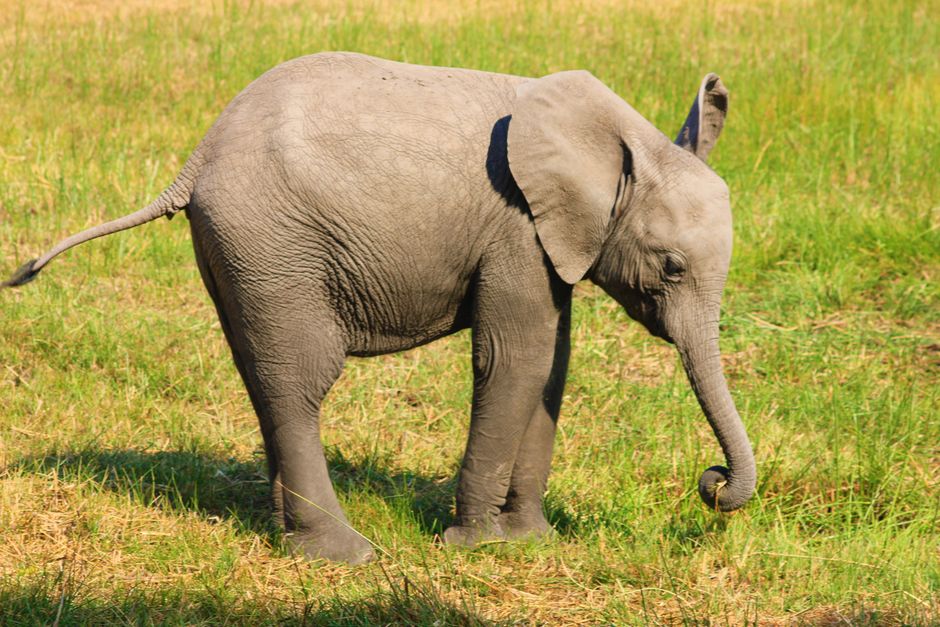
Une souris suffit-elle à faire fuir un éléphant? Les tests disponibles montrent surtout une réaction de surprise face à un petit animal qui surgit, pas une peur particulière des souris.
L’origine du bobard n’a pas de certificat

Pour comprendre cette histoire, il faut commencer par un constat peu spectaculaire : sa date de naissance n’est pas établie. Des récits attribués à l’Antiquité grecque racontent qu’une souris aurait grimpé dans la trompe d’un éléphant et l’aurait rendu fou. La piste de Pline l’Ancien, en 77 après J.-C., revient parfois dans les récits consacrés au mythe, mais cette date ne suffit pas à en prouver l’origine.
Au fil des reprises, le scénario s’est étoffé. La souris aurait pu boucher la trompe, empêcher l’éléphant de respirer ou lui mordiller les pieds. Aucune observation fiable ne montre un éléphant paniquant pour l’une de ces raisons.
À la fin du XVIIe siècle, une autre explication est apparue. Le médecin irlandais Allen Moulin aurait pensé que l’absence supposée d’épiglotte exposait l’éléphant à un rongeur remontant dans sa trompe. Christopher Plumb rapporte cette hypothèse dans The Georgian Menagerie: Exotic Animals in Eighteenth-Century Londonpublié en 2015. Le raisonnement repose toutefois sur une erreur anatomique : l’éléphant possède bien une épiglotte.
Les plateaux télé ont fait bouger le dossier

En 2006, l’émission américaine 20/20 a placé des souris blanches dans les mains d’un journaliste et d’un dresseur, face à plusieurs éléphants de cirque. Les animaux les ont à peine regardées. Ils n’ont ni fui ni manifesté de réaction spectaculaire.
Dans une expérience de MythBustersune souris blanche cachée sous une bouse a été libérée lorsque des éléphants approchaient. Les animaux ont semblé la remarquer et certains ont reculé d’un pas. La scène paraît plus convaincante, mais elle ne permet pas de conclure à une phobie : la souris est apparue brusquement, près des pattes, dans un contexte que les éléphants n’avaient pas le temps d’analyser.
Ces démonstrations télévisées montrent une réactionpas sa cause. Les situations ne sont pas comparables, aucun protocole contrôlé ne mesure une réaction répétée aux souris et les images ne permettent pas d’isoler le rôle du mouvement, de la surprise ou de la proximité.
Le vrai suspect s’appelle le mouvement

Un petit animal qui file soudainement au niveau du sol peut surprendre un éléphant avant que celui-ci ait identifié ce qu’il voit. Le même réflexe pourrait se produire face à un chien, un serpent ou tout autre animal qui surgit près de ses pieds. La réaction observée dépend alors de la nouveauté, de la vitesse et de la distance, pas nécessairement de l’espèce souris.
Il faut distinguer un sursaut d’une peur spécifique. Un sursaut est une réponse immédiate à un stimulus inattendu. Pour établir une peur particulière des souris, il faudrait observer une réaction répétée et propre à ce rongeur. Les scènes connues ne franchissent pas ce seuil. Un pas de côté ne suffit pas à diagnostiquer une peur des souris.
L’hypothèse de la souris qui remonte dans la trompe ne résiste pas davantage à l’examen. L’éléphant possède une épiglotte et peut expulser de l’air par sa trompe. Surtout, rien ne montre qu’il redoute précisément ce scénario. La trompe n’est pas un passage secret vers les poumons.
Pourquoi l’image colle si bien

De Dumbo aux dessins animés, aux livres et aux anecdotes, l’image d’un éléphant terrorisé par un rongeur a été répétée parce qu’elle se comprend en une seconde. Elle inverse les rapports de force et transforme une réaction possible en explication toute faite. Une belle histoire, un mauvais dossier.
Le biais de disponibilité aide à comprendre sa longévité : on se rappelle facilement une scène drôle d’éléphant qui recule, beaucoup moins les situations ordinaires où un éléphant ignore une souris. L’effet de répétition renforce ensuite l’impression de vérité. Une affirmation reprise dans plusieurs endroits paraît confirmée, même lorsque chaque version remonte à la même anecdote.
Le jeu de téléphone arabe ajoute ses propres détails : la surprise devient une peur, la peur devient une phobie, puis la souris finit par gagner un procès qu’aucun test ne lui a vraiment intenté. La viralité d’une scène ne remplace ni un protocole ni une preuve.
Sources et références scientifiques
- Gharibi S, Vaillend C, Lindsay A.. The unconditioned fear response in vertebrates deficient in dystrophin.. Progress in neurobiology. 2024. DOI: 10.1016/j.pneurobio.2024.102590 · PMID: 38484964. (résumé scientifique structuré; texte intégral non fourni)
- The impact of multiple exposures and movement on the fear response of poultry – PMC. Poultry science. DOI: 10.1016/j.psj.2024.104594 · PMID: 39616672.
- Bassler A.W., Arnould C., Butterworth A., Colin L., De Jong I.C., Ferrante V., Ferrari P., Haslam S., Wemelsfelder F., Blokhuis H.J. Potential risk factors associated with contact dermatitis, lameness, negative emotional state, and fear of humans in broiler chicken flocks. Poult. Sci. 2013;92:2811-2826. doi: 10.3382/ps.2013-03208. [DOI] [PubMed] [Google Scholar]. doi:10.3382/ps.2013-03208.
- Campbell A.M., Johnson A.M., Persia M.E., Jacobs L. Effects of Housing System on Anxiety, Chronic Stress, Fear, and Immune Function in Bovan Brown Laying Hens. Animals. 2022;12:1803. doi: 10.3390/ani12141803. [DOI] [PMC free article] [PubMed] [Google Scholar]. doi:10.3390/ani12141803.
- Cloutier S., Newberry R.C., Honda K. Comparison of social ranks based on worm-running and aggressive behaviour in young domestic fowl. Behav. Proc. 2004;65:79-86. doi: 10.1016/proc.2003.07.001. [DOI] [PubMed] [Google Scholar]. doi:10.1016/j.beproc.2003.07.001.
- Cransberg P.H., Hemsworth P.H., Coleman G.J. Human factors affecting the behavior and productivity of commercial broiler chickens. Br. Poult. Sci. 2000;41:272-279. doi: 10.1080/713654939. [DOI] [PubMed] [Google Scholar]. doi:10.1080/713654939.
- de Haas E.N., Nielsen B., Buitenhuis A.J., Rodenburg T.B. Selection on feather pecking affects response to novelty and foraging behavior in laying hens. Appl. Anim. Behav. Sci. 2010;124:90-96. [Google Scholar].
- de Haas E.N., Kemp B., Bolhuis J.E., Groothuis T., Rodenburg T.B. Fear, stress, and feather pecking in commercial white and brown laying hen parent-stock flocks and their relationships with production parameters. Poult. Sci. 2013;92:2259-2269. doi: 10.3382/ps.2012-02996. [DOI] [PubMed] [Google Scholar]. doi:10.3382/ps.2012-02996.
- Edgar J.L., Omi Y., Booth F., Mackie N., Richards G. Fear, anxiety, and production in laying hens with healed keel bone fractures. Poult. Sci. 2023;102:102514. doi: 10.1016/j.psj.2023.102514. [DOI] [PMC free article] [PubMed] [Google Scholar]. doi:10.1016/j.psj.2023.102514.
- Erasmus M., Swanson J. Temperamental turkeys: reliability of behavioral responses to four tests of fear. Appl. Anim. Behav. Sci. 2014;157:100-108. [Google Scholar].
- Forkman B., Boissy A., Meunier-Salaün M.C., Canali E., Jones R.B. A critical review of fear tests used on cattle, pigs, sheep, poultry, and horses. Physiol. Behav. 2007;92:240-374. doi: 10.1016/j.physbeh.2007.03.016. [DOI] [PubMed] [Google Scholar]. doi:10.1016/j.physbeh.2007.03.016.
- Franco B.R., Shynkaruk T., Crowe T., Fancher B., French N., Gillingham S., Schwean-Lardner K. Light color and the commercial broiler: effect on behavior, fear, and stress. Poult. Sci. 2022;101 doi: 10.1016/j.psj.2022.102052. [DOI] [PMC free article] [PubMed] [Google Scholar]. doi:10.1016/j.psj.2022.102052.
- Giersberg M.F., Poolen I., de Baere K., Gunnink H., van Hattum T., van Riel J.W., de Jong I.C. Comparative assessment of general behavior and fear-related responses in hatchery-hatched and on-farm hatched broiler chickens. Appl. Anim. Behav. Sci. 2020;232 [Google Scholar].
- Gray J.A. The psychology of fear and stress. 2nd Ed. Cambridge University Press; Cambridge, UK: 1987. [Google Scholar].
- Partial FAM19A5 deficiency in mice leads to disrupted spine maturation, hyperactivity, and an altered fear response – PMC. PloS one. DOI: 10.1371/journal.pone.0327493 · PMID: 40763294.
- 1.Tom Tang Y, Emtage P, Funk WD, Hu T, Arterburn M, Park EEJ, et al. TAFA: a novel secreted family with conserved cysteine residues and restricted expression in the brain. Genomics. 2004;83(4):727-34. doi: 10.1016/j.ygeno.2003.10.006 [DOI] [PubMed] [Google Scholar]. doi:10.1016/j.ygeno.2003.10.006.
- 2.Jeong I, Yun S, Shahapal A, Cho EB, Hwang SW, Seong JY, et al. FAM19A5l Affects Mustard Oil-Induced Peripheral Nociception in Zebrafish. Mol Neurobiol. 2021;58(9):4770-85. doi: 10.1007/s12035-021-02449-z [DOI] [PubMed] [Google Scholar]. doi:10.1007/s12035-021-02449-z.
- 3.Shahapal A, Cho EB, Yong HJ, Jeong I, Kwak H, Lee JK, et al. FAM19A5 Expression During Embryogenesis and in the Adult Traumatic Brain of FAM19A5-LacZ Knock-in Mice. Front Neurosci. 2019;13:917. doi: 10.3389/fnins.2019.00917 [DOI] [PMC free article] [PubMed] [Google Scholar]. doi:10.3389/fnins.2019.00917.
- 4.Huang S, Zheng C, Xie G, Song Z, Wang P, Bai Y, et al. FAM19A5/TAFA5, a novel neurokine, plays a crucial role in depressive-like and spatial memory-related behaviors in mice. Mol Psychiatry. 2021;26(6):2363-79. doi: 10.1038/s41380-020-0720-x [DOI] [PubMed] [Google Scholar]. doi:10.1038/s41380-020-0720-x.
- Mas P, Chassaing N, Chaix Y, Vincent M-C, Julia S, Bourrouillou G, et al. Molecular characterisation of a ring chromosome 22 in a patient with severe language delay: a contribution to the refinement of the subtelomeric 22q deletion syndrome. J Med Genet. 2002;39(4):e17. doi: 10.1136/jmg.39.4.e17 [DOI] [PMC free article] [PubMed] [Google Scholar]. doi:10.1136/jmg.39.4.e17.
- 6.Kashevarova AA, Belyaeva EO, Nikonov AM, Plotnikova OV, Skryabin NA, Nikitina TV, et al. Compound phenotype in a girl with r(22), concomitant microdeletion 22q13.32-q13.33 and mosaic monosomy 22. Mol Cytogenet. 2018;11:26. doi: 10.1186/s13039-018-0375-3 [DOI] [PMC free article] [PubMed] [Google Scholar]. doi:10.1186/s13039-018-0375-3.
- 7.Kwak H, Cho E-H, Cho EB, Lee Y-N, Shahapal A, Yong HJ, et al. Is FAM19A5 an adipokine? Peripheral FAM19A5 in wild-type, FAM19A5 knockout, and LacZ knockin mice. Mol Cells. 2024;47(12):100125. doi: 10.1016/j.mocell.2024.100125 [DOI] [PMC free article] [PubMed] [Google Scholar]. doi:10.1016/j.mocell.2024.100125.
- 8.Uhlén M, Fagerberg L, Hallström BM, Lindskog C, Oksvold P, Mardinoglu A, et al. Proteomics. Tissue-based map of the human proteome. Science. 2015;347(6220):1260419. doi: 10.1126/science.1260419 [DOI] [PubMed] [Google Scholar]. doi:10.1126/science.1260419.
- 9.Zeisel A, Hochgerner H, Lönnerberg P, Johnsson A, Memic F, van der Zwan J, et al. Molecular Architecture of the Mouse Nervous System. Cell. 2018;174(4):999-1014.e22. doi: 10.1016/j.cell.2018.06.021 [DOI] [PMC free article] [PubMed] [Google Scholar]. doi:10.1016/j.cell.2018.06.021.
- 10.Park S, Shahapal A, Yoo S, Kwak H, Lee M, Lee S-M, et al. FAM19A5 Deficiency Mitigates the Aβ Plaque Burden and Improves Cognition in Mouse Models of Alzheimer’s Disease. Exp Neurobiol. 2024;33(4):193-201. doi: 10.5607/en24017 [DOI] [PMC free article] [PubMed] [Google Scholar]. doi:10.5607/en24017.
- 11.Kim H-B, Yoo S, Kwak H, Ma S-X, Kim R, Lee M, et al. Inhibition of FAM19A5 restores synaptic loss and improves cognitive function in mouse models of Alzheimer’s disease. Cold Spring Harbor Laboratory. 2023. doi: 10.1101/2023.11.22.568357 [DOI] [Google Scholar]. doi:10.1101/2023.11.22.568357.
- 12.Paxinos G, Franklin KB. Paxinos and Franklin’s the mouse brain in stereotaxic coordinates. Amsterdam: Elsevier. 2019. [Google Scholar].
- Evaluating the impact of natural and artificial light treatments on fear response and welfare parameters in commercial broilers – PMC. Poultry science. DOI: 10.1016/j.psj.2025.106343 · PMID: 41518908.
- Aviagen. Aviagen; Huntsville, AL: 2018. Ross Broiler Management Handbook. [Google Scholar].
- Bailie C.L., Ball M.E.E., O’Connell N.E. Influence of the provision of natural light and straw bales on activity levels and leg health in commercial broiler chickens. Animal. 2013;7:618-626. doi: 10.1017/S1751731112002108. [DOI] [PubMed] [Google Scholar]. doi:10.1017/S1751731112002108.
- Bradshaw R.H., Kirkden R..D., Broom D.M. A review of the aetiology and pathology of leg weakness in broilers in relation to welfare. Avian Poult. Biol. Rev. 2002;13:45-103. [Google Scholar].
- Cobb-Vantress. Cobb-Vantress, Inc; Siloam Springs, AR: 2021. Cobb Broiler: Management Guide. [Google Scholar].
- de Jong I.C., Gunnink H. Effects of a commercial broiler enrichment programme with or without natural light on behaviour and other welfare indicators. Animal. 2019;13:384-391. doi: 10.1017/S1751731118001805. [DOI] [PubMed] [Google Scholar]. doi:10.1017/S1751731118001805.
- Forkman B., Boissy A., Meunier-Salaün M., Canali E., Jones R. A critical review of fear tests used on cattle, pigs, sheep, poultry and horses. Physiol. Behav. 2007;92(3):340-374. doi: 10.1016/j.physbeh.2007.03.016. [DOI] [PubMed] [Google Scholar]. doi:10.1016/j.physbeh.2007.03.016.
- Fouda M.M., Darwish R..A. Comparative effects of natural and artificial light on behaviour, performance, and welfare of broiler chickens. Abou-Ismail U.A., Mohammed A.S., editors. Comparative effects of natural and artificial light on behaviour, performance, and welfare of broiler chickensMansoura Vet. Med. J. 2018;19(1):321-332. [Google Scholar].
- Garner J., Falcone C., Wakenell P., Martin M., Mench J. Reliability and validity of a modified gait scoring system and its use in assessing tibial dyschondroplasia in broilers. Br. Poult. Sci. 2002;43:355-363. doi: 10.1080/00071660120103620. [DOI] [PubMed] [Google Scholar]. doi:10.1080/00071660120103620.
- Jackson A., Quino M., Gautam A., Gilpin M., Still K., Landers D., Baker-Cook B. The impact of multiple exposures and movement on the fear response of poultry. Poult. Sci. 2025;104(1) doi: 10.1016/j.psj.2024.104594. [DOI] [PMC free article] [PubMed] [Google Scholar]. doi:10.1016/j.psj.2024.104594.
- Kang S.W., Christensen K..D., Kidd M.T., Jr., Orlowski S.K., Clark J. Effects of a variable light intensity lighting program on the welfare and performance of commercial broiler chickens. Front. Physiol. 2023;14 doi: 10.3389/fphys.2023.1059055. [DOI] [PMC free article] [PubMed] [Google Scholar]. doi:10.3389/fphys.2023.1059055.
- King-Smith P.E. Vol. 2. DJ Bell and BM FreemanAcademic Press; London, UK: 1971. Special senses; pp. 143-156. (Physiology and Biochemistry of the Domestic Fowl). [Google Scholar].
- Linhoss J.E., Davis J..D., Campbell J.C., Purswell J.L., Griggs K.G., Edge C.M. Light intensity and uniformity in commercial broiler houses using lighting programs derived from Global Animal Partnership (GAP) lighting standards. J. Appl. Poult. Res. 2023;32(1) [Google Scholar].
- Marine Cestes. Les éléphants ont-ils réellement peur des souris?. 2024.
- Cindy Rasmussen. Are Elephants Really Afraid of Mice? An Elephant Expert Weighs In.. 2024.
- admin. Les éléphants ont-ils une peur des souris? Démêlons le vrai du faux. 2025.
- Remy Melina. Are Elephants Really Afraid of Mice?. 2016.
